Home › Stormwater Management Facility Hydroseeding
Our stormwater facility hydroseeding in San Antonio, TX stabilizes basins, forebays, channels, and ponds. We use seed mixes that tolerate wet dry cycles and support infiltration and filtration. Keep your stormwater features functional, compliant, and visually appealing.
Legendary Hydroseeding San Antonio provides professional stormwater facility hydroseeding throughout San Antonio, TX, Texas and the surrounding area. Our licensed, insured crew delivers safe, clean, on-time work with a free estimate before anything begins. Call 830-590-1696 or request your free quote.
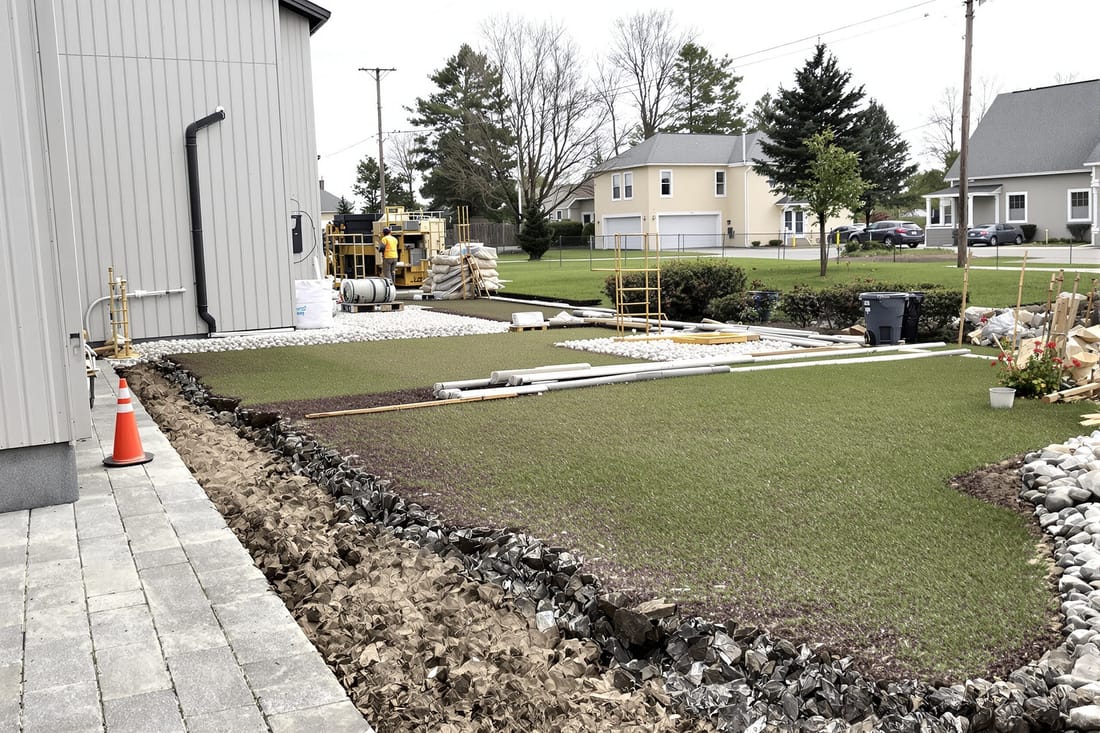
Stormwater facility hydroseeding for San Antonio properties
Stormwater ponds, detention basins, and drainage swales in San Antonio carry a big responsibility. They slow down runoff, trap sediment, and protect our creeks and the Edwards Aquifer. Hydroseeding is one of the most effective ways to stabilize these facilities quickly and keep them functioning as designed.
Legendary Hydroseeding San Antonio focuses specifically on stormwater facility hydroseeding for commercial sites, subdivisions, municipal projects, and large private properties. We understand the engineering intent shown on your plans and match the seed mix, mulch, and application rate to the performance your stormwater management system needs. Our team is familiar with local conditions in Bexar County, from shallow rocky soils on the North Side to clay-heavy areas on the South and West Sides, and we design each hydroseeding application around those realities so vegetation actually takes hold and stays in place during heavy rains.
How hydroseeding stabilizes stormwater basins and swales
In a stormwater facility, bare soil on side slopes, embankments, and channels is easily eroded by sheet flow and concentrated runoff. Hydroseeding creates a bonded layer of mulch, seed, and tackifier that holds the soil in place until roots establish. This is crucial for the inlets, outfalls, and emergency spillways that see the highest velocities.
For San Antonio stormwater basins and ditches, we typically use a combination of turf-type grasses for fast cover and deeper rooting species for long term stabilization. On the flatter shelves and forebays, we may include species that tolerate periodic inundation. Around higher flow areas such as outfall aprons, we often pair hydroseeding with rock riprap or concrete stabilization to protect against scour while the vegetation matures.
Because many local facilities are designed with gentle, wide side slopes, hydroseeding is usually more cost-effective and uniform than sodding those areas. It also allows us to adjust the seed mix from top of bank to low flow line, which is important when you have zones that alternate between dry and saturated conditions.
Our step by step stormwater facility hydroseeding process
Legendary Hydroseeding San Antonio follows a defined process tailored to stormwater infrastructure, not just open fields.
1. Site walk and plan review: We walk the facility with your superintendent, property manager, or engineer. We review grading, check the as-built slopes, look for signs of standing water, and review any SWPPP or City of San Antonio requirements for vegetative cover.
2. Soil preparation: We remove debris, construction trash, and large rocks, then lightly scarify compacted surfaces where safe to do so. In many San Antonio basins the clay is very tight, so we focus on creating just enough texture for seed-to-soil contact without destabilizing slopes.
3. Seed mix selection: Based on your plans and our local experience, we choose a mix that fits the facility type. For example, a dry detention basin with shallow slopes may get drought tolerant Bermuda and native bunchgrasses, while a water quality pond forebay may require more moisture tolerant grasses and sedges. If your project has a specified TxDOT or City seed mix, we match it or propose an equivalent.
4. Tank mixing: At the truck, we add water, premium mulch, seed, fertilizer (if appropriate for the drainage area), and tackifier. For steeper slopes or highly erodible soils, we increase mulch and tackifier rates and may use a bonded fiber matrix for extra hold.
5. Application: Using hoses or turret nozzles, we apply the slurry in overlapping passes so there are no thin areas. We pay special attention to around curb inlets, around outfalls, and on interior berms where minor imperfections can lead to rills.
6. Final walkthrough and watering guidance: We review coverage with you, flag any high risk areas for monitoring, and provide specific watering and access instructions so mowing crews and maintenance staff know how to protect the new vegetation.
Seed mixes, mulch types, and design options for local conditions
Stormwater facility hydroseeding is not one size fits all for the San Antonio area. Climate, soil type, and the engineering purpose of the facility all play a role.
For full sun detention basins that are normally dry, we often recommend warm season grasses that tolerate heat and intermittent moisture, such as common or improved Bermuda combined with native species like sideoats grama or green sprangletop. These mixes establish relatively quickly and handle our long hot summers. For shaded swales under tree canopies or between buildings, we may shift to more shade tolerant turf-type varieties where allowed by your specifications.
Mulch type is another important choice. In lower risk areas with gentle slopes, a standard wood or paper-wood blended mulch works well and keeps costs down. On steeper side slopes and around inlet and outlet structures, we often specify a heavier virgin wood fiber mulch or a bonded fiber matrix that knits together more tightly. This helps resist the intense, short-duration storms that are common in Bexar County.
If your project includes native habitat or low impact development features, we can work with your landscape architect or civil engineer to incorporate native grass and wildflower mixes in upper slope zones while maintaining more durable turf-type grasses closer to high flow paths. This hybrid approach can meet ecological goals without compromising erosion control.
Cost factors for stormwater facility hydroseeding in San Antonio
Pricing for stormwater facility hydroseeding depends on a mix of quantity, difficulty, and specification. Understanding these factors helps you budget accurately and compare bids fairly.
Major cost drivers include total square footage, slope steepness, site access, and the type of mulch and seed required. A large, gently sloped basin with good truck access and a standard grass mix will be on the lower end per square foot. A smaller site with very steep interior slopes that requires hose work from multiple set-up points, plus a bonded fiber matrix and specified native mix, will be higher per square foot due to material and labor intensity.
Local conditions also matter. Caliche outcrops, rocky benches, or wet pockets in your facility may require extra prep or multiple visits. If your stormwater pond still has active inflow from upstream construction, we may recommend waiting or phasing the hydroseeding, since heavy sediment loads can smother new seedlings.
We provide written estimates that separate material choices and show you the impact of options like upgraded mulch or added tackifier. That way you can decide whether extra upfront investment is worth it for critical slopes or hard to access areas. Our goal at Legendary Hydroseeding San Antonio is to align cost with actual performance needs, not oversell or underbuild the stabilization your facility requires.
Common problems and how we prevent failures
Stormwater facility hydroseeding fails for a few predictable reasons: poor soil contact, inadequate mulch coverage, wrong seed mix for the site, or heavy runoff before roots are established. We design our work around avoiding those issues.
To prevent seed washout, we use proper tackifier rates and, if needed, higher performance mulches on steeper or longer slopes. Around inlets and outlets where flows concentrate, we often recommend combining hydroseeding with erosion control blankets, turf reinforcement mats, or riprap aprons. That combination approach is especially important in San Antonio subbasins that see intense storms, such as along Leon Creek or Salado Creek tributaries.
Another common issue is maintenance conflicts. Mowing crews or construction traffic can damage young vegetation if they enter a basin too early. At project closeout we provide clear guidance on when to mow, typical mower heights for the selected grasses, and where to avoid rutting the slopes. For HOA and commercial properties, we can also meet with your landscaper on-site to explain the establishment period.
If washouts do occur after an unusually heavy storm, we can spot repair affected areas by regrading rills, reapplying hydroseed, and adjusting mulch types or quantities. Because we work across San Antonio, we track which facilities see repeated high flows and adjust our approach for long-term durability.
Permits, inspections, and choosing a hydroseeding contractor
Stormwater facilities in the San Antonio area are often subject to oversight by the City of San Antonio, Bexar County, or your local municipality, along with TCEQ requirements tied to your construction stormwater permit. Many closeout inspections require visible, stable vegetative cover on basin slopes and swales before bonds are released or certificates of occupancy are issued.
Legendary Hydroseeding San Antonio coordinates with your project manager or engineer to understand the specific vegetative cover requirements for your job. We can help you show inspectors that a hydroseeded facility has appropriate mulch coverage and is on track for establishment, which is often acceptable when documented properly with photos and dates of installation.
When selecting a contractor for stormwater facility hydroseeding, look beyond a simple price per square foot. Ask whether they have experience with engineered stormwater structures rather than just lawns, what mulch and tackifier rates they use on different slopes, and how they handle repairs after major rain events. Request examples of local projects and, if possible, visit a basin that has gone through at least one full rainy season.
Our company is locally based, carries appropriate insurance, and is accustomed to working within subdivision development schedules, commercial build-out timelines, and municipal project requirements. If you have an upcoming punch list walk or need to stabilize a basin quickly to stay in compliance, we can usually mobilize promptly and coordinate with your erosion control and grading crews so that hydroseeding is timed for the best chance of success.